Seneca County reports first COVID-19 ...
 The Seneca County Health Department received notification this morning that a Seneca County resident who had tested positive for COVID-19 has passed away. This is the first reported death related to COVID-19 in Seneca County. The individual was a male in his late 60’s and passed away while hospitalized.“We are deeply saddened to learn of [...]
Maximizing Your Gaming Fun: Online Casino Bonuses Tips and Tricks ...
 Utilizing online casino bonuses can significantly elevate your gaming journey and potentially amplify your winnings. According to オンラインカジノ ボーナス, it’s important to find the bonuses that align with your gameplay and preferences. And maximizing these bonuses requires a solid understanding of how they work and the strategies needed to make the most of them [...]
The Rise of New Casinos: Exploring the Latest Gaming Destinations...
New casinos often incorporate modern technology and innovative designs to attract customers and stand out in a crowded market. According to Neue Online Casinos, many new online casinos offer personalized rewards programs, VIP lounges, and other amenities to keep customers coming back.
Community-Wide “Drive Thru” Food Dist...
 Friday April 10, 2020 11am To 1pm Seneca County Office Building 1Dipronio Drive Waterloo, New York 13165
Tuesday April 14, 2020 2pm To 5pm South Seneca Central School 7263Main Street Ovid, New York 14521
Seneca County has partnered with Foodlink and the Ovid Federated Church to provide a community-wide food distribution to supply hous [...]
Friday April 10, 2020 11am To 1pm Seneca County Office Building 1Dipronio Drive Waterloo, New York 13165
Tuesday April 14, 2020 2pm To 5pm South Seneca Central School 7263Main Street Ovid, New York 14521
Seneca County has partnered with Foodlink and the Ovid Federated Church to provide a community-wide food distribution to supply hous [...]
Urgent Care Sets New Hours, Offers Te...
 Geneva location is open 8am-8pm daily
FLH Medical, P.C.’s Urgent Care located at 1991 Balsley Road at Lifecare Medical Associates in Seneca Falls will now be open from 8 a.m. – 5 p.m. every day of the week.
For evening needs, patients are being directed to our Geneva location in Finger Lakes Health Commons, 789 Pre-Emption Road which [...]
Geneva location is open 8am-8pm daily
FLH Medical, P.C.’s Urgent Care located at 1991 Balsley Road at Lifecare Medical Associates in Seneca Falls will now be open from 8 a.m. – 5 p.m. every day of the week.
For evening needs, patients are being directed to our Geneva location in Finger Lakes Health Commons, 789 Pre-Emption Road which [...]
SFDC Supports Local Food Distribution...
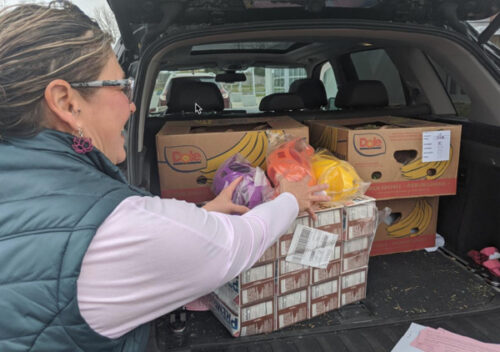 The Seneca Falls Development Corp Donates Sports Activity Equipment in Support of Local Food Distribution Efforts
The Seneca Falls Development Corporation recently donated over 200 outdoor play toys from its Team Active8 youth program to the food distribution efforts of the Seneca Falls Central School District and the Seneca Falls Bac [...]
The Seneca Falls Development Corp Donates Sports Activity Equipment in Support of Local Food Distribution Efforts
The Seneca Falls Development Corporation recently donated over 200 outdoor play toys from its Team Active8 youth program to the food distribution efforts of the Seneca Falls Central School District and the Seneca Falls Bac [...]
Felony Criminal Contempt Arrest in Ge...
 The Geneva Police Department Uniformed Division arrested Alexis Lebron, 22, of Vienna Rd. Newark for Aggravated Criminal Contempt, a D Felony. She allegedly, with knowledge of a duly served Order of Protection, violated said Order of Protection and caused serious physical injury to a protected person, during a Domestic Incident.
FL Forest Service Tips for Visitors
 As more and more people look for opportunities to get outside in search of exercise, U.S. Forest Service officials in New York are asking recreationists to be mindful of trail conditions and respectful of other people using National Forest System lands as the state continues to respond to the COVID-19 outbreak. With mud season now upon u [...]
Teresa Cerjanic - Obituary
 Seneca Falls – Teresa Cerjanic, 96, formerly of Seneca Falls & Waterloo, NY, passed away on Sunday (April 5, 2020) at Seneca Nursing & Rehabilitation Center, Waterloo, NY.
Due to recommendations put forth as the result of the COVID-19 Virus, funeral services and burial, in St. Columbkille Cemetery, Seneca Falls, will be at the [...]
Seneca Falls – Teresa Cerjanic, 96, formerly of Seneca Falls & Waterloo, NY, passed away on Sunday (April 5, 2020) at Seneca Nursing & Rehabilitation Center, Waterloo, NY.
Due to recommendations put forth as the result of the COVID-19 Virus, funeral services and burial, in St. Columbkille Cemetery, Seneca Falls, will be at the [...]
County Endorses CDC’s Call to Use Clo...
 The Centers for Disease Control and Prevention (CDC) is now recommending that people voluntarily wear cloth face coverings in public settings where other social distancing measures are difficult to maintain – such as grocery stores and pharmacies to combat the spread of COVID-19. The Directors of both the Seneca County Health Department [...]
7 steps to protect farm workers from ...
 Biosecurity is second nature to many dairy and livestock producers
ITHACA, N.Y. — Biosecurity is
second nature to many dairy and livestock producers, so let’s apply
that perspective to the current pandemic. First, a quick review of what
we know about COVID-19 and how it spreads.
According to the Centers for Disease Control [...]
Biosecurity is second nature to many dairy and livestock producers
ITHACA, N.Y. — Biosecurity is
second nature to many dairy and livestock producers, so let’s apply
that perspective to the current pandemic. First, a quick review of what
we know about COVID-19 and how it spreads.
According to the Centers for Disease Control [...]
Seneca County Has First Verified Covi...
Seneca County is no longer the only county in the state that does not have a confirmed case of Coronavirus-19. The Seneca County Health Department received notification today that a Seneca County resident has tested positive for COVID-19. This individual is currently being isolated and monitored by the Seneca County Health Department. He [...]
Bryan A. Tam - Obituary
 Penn Yan – Bryan A. Tam, 55, of Route 54, Penn Yan, NY, passed away on Wednesday (March 18, 2020) at Strong Memorial Hospital, Rochester, NY, with loved ones by his side
A Memorial Mass at St. Mary’s Church, Waterloo, NY and a
celebration of life will be held at a later date & time to
be announced. There will [...]
Penn Yan – Bryan A. Tam, 55, of Route 54, Penn Yan, NY, passed away on Wednesday (March 18, 2020) at Strong Memorial Hospital, Rochester, NY, with loved ones by his side
A Memorial Mass at St. Mary’s Church, Waterloo, NY and a
celebration of life will be held at a later date & time to
be announced. There will [...]
Mitrano, Secures Democratic Ballot fo...
 Tracy Mitrano, Congressional Candidate for NY 23 Secures Democratic Ballot
Petition
Signatures Far Surpassed Minimum Requirement
Announcements were made on Thursday, March 19, 2020 that Tracy Mitrano (D-Penn Yan) secured the Democratic line on the ballot as NY 23 District’s Democratic Congressional candidate.
Petitions
were fil [...]
Tracy Mitrano, Congressional Candidate for NY 23 Secures Democratic Ballot
Petition
Signatures Far Surpassed Minimum Requirement
Announcements were made on Thursday, March 19, 2020 that Tracy Mitrano (D-Penn Yan) secured the Democratic line on the ballot as NY 23 District’s Democratic Congressional candidate.
Petitions
were fil [...]
SFPD Awarded Grant for D.A.R.E.
 The Seneca Falls Police Department announced it has been named as one of the recipients of this year’s Seneca County Youth Bureau/Youth Board Golf Grant Award in the amount of $425.00 to help fund the department’s D.A.R.E. program. Each year, the Seneca County Youth Bureau/Board hosts and organizes an annual golf tournament, with proceed [...]
Public Review 2020 Draft Hunting and ...
 Montezuma National Wildlife Refuge Releases for Public Review 2020 Draft Hunting and Fishing Plan
Hunting and fishing are traditional uses of the National Wildlife Refuge System. At Montezuma National Wildlife Refuge (NWR, Refuge), we welcome people of all backgrounds and abilities to participate in recreational hunting and to enjoy f [...]
Montezuma National Wildlife Refuge Releases for Public Review 2020 Draft Hunting and Fishing Plan
Hunting and fishing are traditional uses of the National Wildlife Refuge System. At Montezuma National Wildlife Refuge (NWR, Refuge), we welcome people of all backgrounds and abilities to participate in recreational hunting and to enjoy f [...]
Seneca County Sheriff Report
 Accidental Gun Discharge: Felony Reckless Endangerment Arrest
The Seneca County Sheriff’s Office reports on March 20, 2020 at approximately 3:00pm, Investigators arrested Hunter L Rogers, age 28 of 2170 E Seneca St Ovid, for 5 counts of Reckless Endangerment 1st (Class D Felony). It is alleged that Rogers inadvertently shot a .22 lon [...]
Accidental Gun Discharge: Felony Reckless Endangerment Arrest
The Seneca County Sheriff’s Office reports on March 20, 2020 at approximately 3:00pm, Investigators arrested Hunter L Rogers, age 28 of 2170 E Seneca St Ovid, for 5 counts of Reckless Endangerment 1st (Class D Felony). It is alleged that Rogers inadvertently shot a .22 lon [...]
Senators: Small Business Fund/Halt to...
 The Western New York Senate Delegation today called for the establishment of a $890 million Small Business Emergency Assistance Fund for the State of New York. Additionally, the delegation called for the tabeling of any budget proposals to ban the use of serviceware, including takeout containers. This proposed ban is especially concernin [...]
Geneva Woman Charged With Selling Coc...
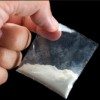 Geneva Police Department Narcotics Unit arrested Kayla N. Glover, 27, of Nursery Ave., Geneva, for Criminal Sale of a Controlled Substance. Glover allegedly sold cocaine in the City of Geneva. The arrest was made as a result of a several month investigation into the sale of Cocaine in the City of Geneva. The charge is a felony.
Covid-19 Reaches Seneca County
The Seneca County Health Department was notified today that an employee of Seneca Nursing and Rehabilitation Center located in Waterloo, NY has tested positive for COVID-19. The employee is not a Seneca County resident and is currently in isolation and being monitored by their local health department. According to Vickie Swinehart, Direc [...]
Pair Charged with Endangering Two Sma...
 On March 17, 2020 at 1:40 AM the Town of Seneca Falls Police Department arrested Daryl J. Bryerton, age 27, of Seneca Falls, NY and Aubrey S. Asbrand, age 24, of Seneca Falls, NY for Endangering the Welfare of a Child.
The arrest stems from a report of two children being found outside an apartment complex. Additionally, Bryerton was [...]
On March 17, 2020 at 1:40 AM the Town of Seneca Falls Police Department arrested Daryl J. Bryerton, age 27, of Seneca Falls, NY and Aubrey S. Asbrand, age 24, of Seneca Falls, NY for Endangering the Welfare of a Child.
The arrest stems from a report of two children being found outside an apartment complex. Additionally, Bryerton was [...]
SFPD Announces Procedural Changes Dur...
As CIVID-19 continues to evolve, so does the required Seneca Falls PD response protocol. Effective immediately, all non-emergency incidents, depending on the nature, that require law enforcement involvement will be handled over the telephone in order to limit contact. On calls requiring law enforcement response, officers may ask you to s [...]
Chamber Provides List of Businesses P...
The Seneca County Chamber of Commerce has provided a list of Chamber Food & Beverage Businesses that remain open for take-out/delivery. Although restaurants have been ordered to close during the Coronavirus 19 emergency, take-out and delivery services are still available.
Coronavirus is taking a toll on our economy and the small b [...]
Geneva Man Charged with Felony Strang...
On 3.18.2020 @ approximately 12:50am, Geneva Police Department Uniformed Division arrested Michael G. Mendez, 55, of North St., Geneva, for Strangulation in the 2nd Degree, a D Felony. The individual allegedly obstructed the breathing and/or blood circulation an individual causing physical injury which stemmed from a domestic incident.
[...]
First Confirmed CV19 Case in Cayuga ...
 Cayuga County Public Health Director Kathleen Cuddy
At a news conference on Wednesday night, Cayuga County Public Health Director Kathleen Cuddy said a man in his mid-30’s who was passing through the area on Saturday when he fell ill has tested positive for the Corona-19 Virus. He is not a resident of Cayuga County.
She says the heal [...]
Cayuga County Public Health Director Kathleen Cuddy
At a news conference on Wednesday night, Cayuga County Public Health Director Kathleen Cuddy said a man in his mid-30’s who was passing through the area on Saturday when he fell ill has tested positive for the Corona-19 Virus. He is not a resident of Cayuga County.
She says the heal [...]
COVID-19: First Confirmed Case in Tom...
The Tompkins County Health Department says New York State has advised them of a positive test result, the first for the area. The sample, which was analyzed at the NYS DOH Wadsworth Laboratory in Albany, has been sent to Centers for Disease Control and Prevention (CDC) for confirmation.
The Health Department says the individual ha [...]
Local Residents Feeling the Impact of...
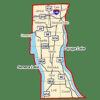 The impact of the response to the COVID-19 Virus will be significant. Restaurants and bars will only be able to offer take-out and delivery services, the del Lago Casino will be closed after 8pm today and all gyms and movie theatres have been instructed to close. Gatherings of 50 or more people have been banned throughout NY, Conn and NJ [...]
Police: Man Violated Protection Order...
 Steven Sinicropi
Police say a Seneca Falls man violated a Class A Order of Protection twice within 12 hours
On Sunday, March 15, 2020, at 10:35 am the Town of Seneca Falls Police Department arrested Steven J. Sinicropi, age 58, of Seneca Falls, New York. This arrest is the second in less than twelve hours after Sinicropi failed to comp [...]
Steven Sinicropi
Police say a Seneca Falls man violated a Class A Order of Protection twice within 12 hours
On Sunday, March 15, 2020, at 10:35 am the Town of Seneca Falls Police Department arrested Steven J. Sinicropi, age 58, of Seneca Falls, New York. This arrest is the second in less than twelve hours after Sinicropi failed to comp [...]
City of Geneva Posts Response to CV-1...
 Due to the Novel Coronavirus pandemic, the Office of the City Manager orders all events approved by the City utilizing public resources be cancelled immediately. This order will remain in effect until further notice. Event planners and the community will be notified when this order is lifted. The health and safety of our residents and vi [...]
All Seneca County Schools to Close in...
 Schools will close from Wed. March 18 through at least April 14.
In collaboration with Seneca County Department of Health, and out of an abundance of caution, all four school districts, including Seneca Falls, have unanimously decided to close all schools and cancel all extra-curricular activities beginning Wednesday, March 18, 202 [...]
Schools will close from Wed. March 18 through at least April 14.
In collaboration with Seneca County Department of Health, and out of an abundance of caution, all four school districts, including Seneca Falls, have unanimously decided to close all schools and cancel all extra-curricular activities beginning Wednesday, March 18, 202 [...]
Test for Covid-19 In Geneva Comes Out...
Geneva Police Updates their report of a possible Covid-19 infection in Geneva. The result from the COVID-19 test was negative and the police officer voluntary quarantines have ended.
In a news release, an official statement reads: “We would like to thank the City of Geneva Police Officers and their families for being patient dur [...]